


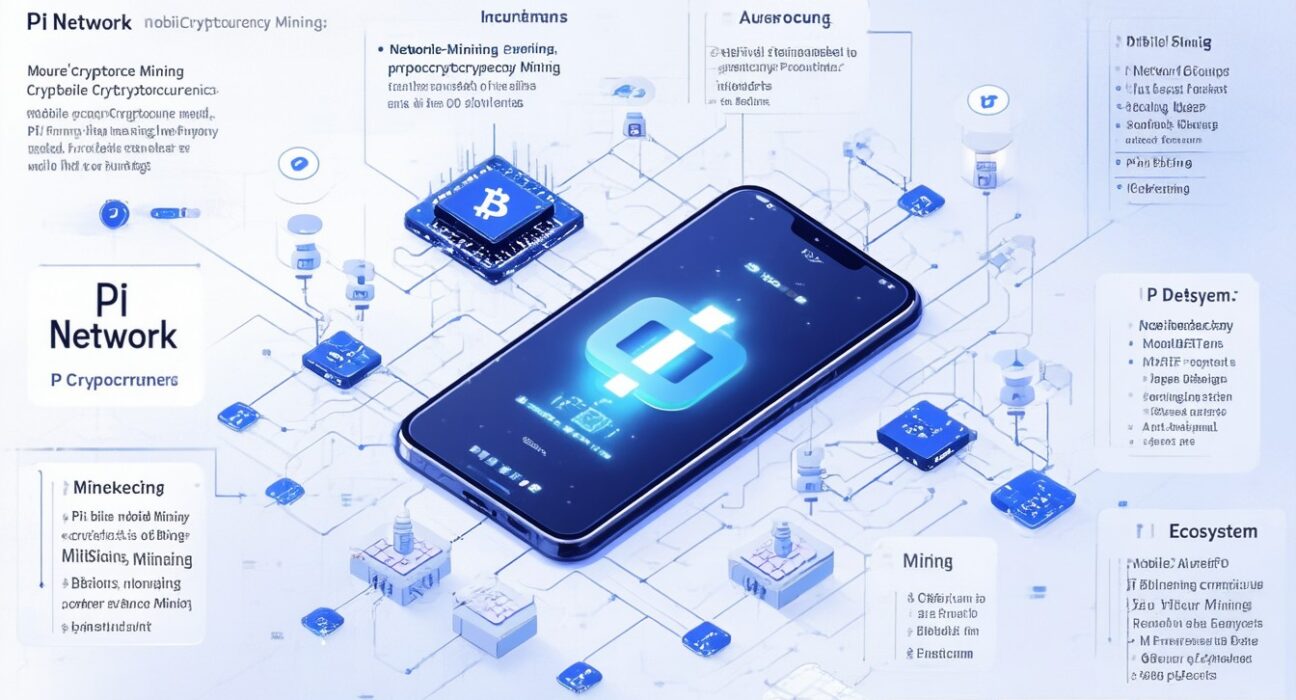
In the shifting landscape of digital finance, Pi Network has emerged as a pioneer, blending mobile-first accessibility with secure cryptocurrency mining. As global interest in decentralized currencies continues to grow, Pi Network’s novel approach—enabling users to mine coins directly from their smartphones without draining battery power—offers a stark contrast to the energy-intensive models of traditional cryptocurrencies like Bitcoin. With a rapidly expanding user base and an evolving suite of ecosystem applications, Pi Network is positioned at the forefront of mobile-based blockchain innovation.
What Is Pi Network? Core Concepts and Mechanisms
Simplified Mobile Mining
Pi Network was designed to democratize cryptocurrency mining. The platform allows individuals to mine Pi coins using a straightforward mobile application on iOS and Android devices. Unlike older mining protocols that require specialized hardware, Pi’s algorithm (the Stellar Consensus Protocol derivative) ensures low computational requirements and high energy efficiency. The act of “mining” on Pi isn’t resource-intensive; it prioritizes network security through user validation and social trust.
Security Through Social Consensus
The protocol reinforces trust by encouraging users to build their “security circles”—trusted acquaintances whose role is to validate each other’s genuine participation. This approach not only minimizes fraudulent activity but also fosters a genuine sense of community seldom seen in mainstream mining operations.
“By integrating social consensus mechanisms into its protocol, Pi Network is able to balance ease of use with robust security, effectively lowering the barrier to entry for millions of users worldwide,” notes Dr. Christine Le, a blockchain analyst and early observer of mobile mining trends.
Key Features of the Pi Ecosystem
The Pi App: Gateway to the Ecosystem
At the heart of Pi Network lies the Pi app, which serves multiple purposes:
- Mining interface: Users “check in” daily to keep mining Pi coins, reiterating the platform’s focus on habitual, low-barrier engagement.
- Wallet functionality: The native wallet allows users to hold, receive, and transfer Pi coins.
- Marketplace access: In-app features support direct peer-to-peer transactions, where Pi can be exchanged for goods and services.
User Adoption and Global Reach
Pi Network reports a user base numbering in the tens of millions, spanning over 200 countries. This growth is substantially fueled by social sharing and referral incentives, which encourage network expansion through trusted connections—echoing models seen in successful tech platform launches.
Real-world adoption is visible in the “Pi barter marketplaces” springing up online, where users trade services and products for Pi, often in the absence of official exchange listings. While not yet universally recognized as a medium of exchange, Pi has cultivated an active community experimenting with real-world use cases.
Ecosystem Apps and Developer Engagement
Developers can leverage Pi’s open platform to create decentralized apps (dApps) that interact directly with the Pi blockchain. This ongoing development drive reflects a broader trend across blockchain projects—building layered ecosystems to support everything from social media to DeFi (Decentralized Finance) and digital identity.
How Does Pi Network Differ from Traditional Cryptocurrency Mining?
Energy Consumption and Accessibility
Bitcoin and Ethereum mining are notorious for their significant energy needs, often requiring dedicated hardware and contributing to concerns over environmental impact. In contrast, Pi Network’s approach leverages existing mobile hardware with negligible power requirements, positioning it as a sustainable entrant in the crypto-mining field.
Focus on Social Validation vs. Computational Power
Traditional mining rewards those with the most powerful equipment—a dynamic that can concentrate wealth and influence in a handful of regions or operators. Pi Network subverts this paradigm by rewarding active participation and social verification rather than raw computational output. Such dynamics have the potential to make crypto participation more equitable and geographically diverse.
Addressing Skepticism and Ongoing Criticisms
Gradual Roadmap and Transparency
Since its 2019 inception, Pi Network has faced criticism regarding lack of liquidity, prolonged test phases, and delayed mainnet launches. Furthermore, concerns about “too-good-to-be-true” mobile mining models have triggered comparisons to pyramid schemes. However, Pi Network maintains that its phased approach (testnet, enclosed mainnet, and future open mainnet) is designed to prioritize network security, proper KYC (Know-Your-Customer) verification, and regulatory compliance.
Transparency in development updates and community engagement remains pivotal. For many users, the true test will be the platform’s handling of the open mainnet transition and integration with established exchanges.
Privacy and Data Security Considerations
App-based mining platforms often solicit personal information for KYC and anti-fraud measures. Pi Network asserts that user data is protected via encryption and rigorous privacy protocols, although users are well-advised to follow best practices and review platform disclosures.
The Broader Impact: Pi Network’s Place in Crypto Evolution
Social Crypto: Community as Currency
The network’s focus on social validation challenges the traditional notion of mining as a purely computational arms race. Instead, the Pi ecosystem hinges on trust, reputation, and mutually reinforcing relationships. This approach echoes broader trends in Web3, where community-driven governance (such as DAOs) and user-centric value creation are gaining ground.
Experimenting With Real-World Utility
In regions where banking infrastructure is limited but mobile phone adoption is high, Pi’s lightweight model offers an accessible on-ramp to digital commerce. Early anecdotal evidence points to thriving barter economies in emerging markets—though widespread commercial adoption remains a work in progress.
Conclusion: The Road Ahead for Pi Network
Pi Network is a bold attempt to rethink cryptocurrency mining and community participation for a mobile-first world. By prioritizing accessibility, energy efficiency, and a socially fueled ecosystem, it addresses key criticisms of early cryptocurrencies. However, challenges remain, from proving long-term value to securing regulatory clarity and global acceptance. As the open mainnet phase approaches, the project’s next steps will be watched closely across both crypto and fintech circles.
FAQs
What is Pi Network and how does it work?
Pi Network is a mobile-focused cryptocurrency project that enables users to mine Pi coins securely on smartphones through social consensus rather than power-intensive computation. The system rewards users for daily activity and verification within a trusted network.
Is Pi Network free to join and mine?
Yes, joining Pi Network and mining Pi coins is free. The application operates without consuming significant device resources, making entry easy for most smartphone users.
Can I trade or sell Pi coins on exchanges?
As of now, Pi coin is not widely listed on public exchanges. Trading is mostly limited to in-app peer-to-peer transactions and community bartering, with broader exchange listing anticipated after the open mainnet launch.
Is Pi Network a scam or legitimate project?
Pi Network is a legitimate project with a large user community and a publicly available whitepaper. However, users should exercise caution, as with any emerging technology, and remain attentive to official updates and security best practices.
How does Pi Network keep mining secure without high energy use?
Pi Network uses a social consensus algorithm that depends on users building trusted circles to verify real participation, which replaces the need for energy-consuming computations seen in traditional crypto mining.
What are the future prospects for Pi Network?
Pi Network’s future will depend on the successful rollout of its open mainnet, integration with exchanges, and continued development of useful ecosystem applications. As the project evolves, widespread adoption and tangible utility will be key factors in its long-term success.