


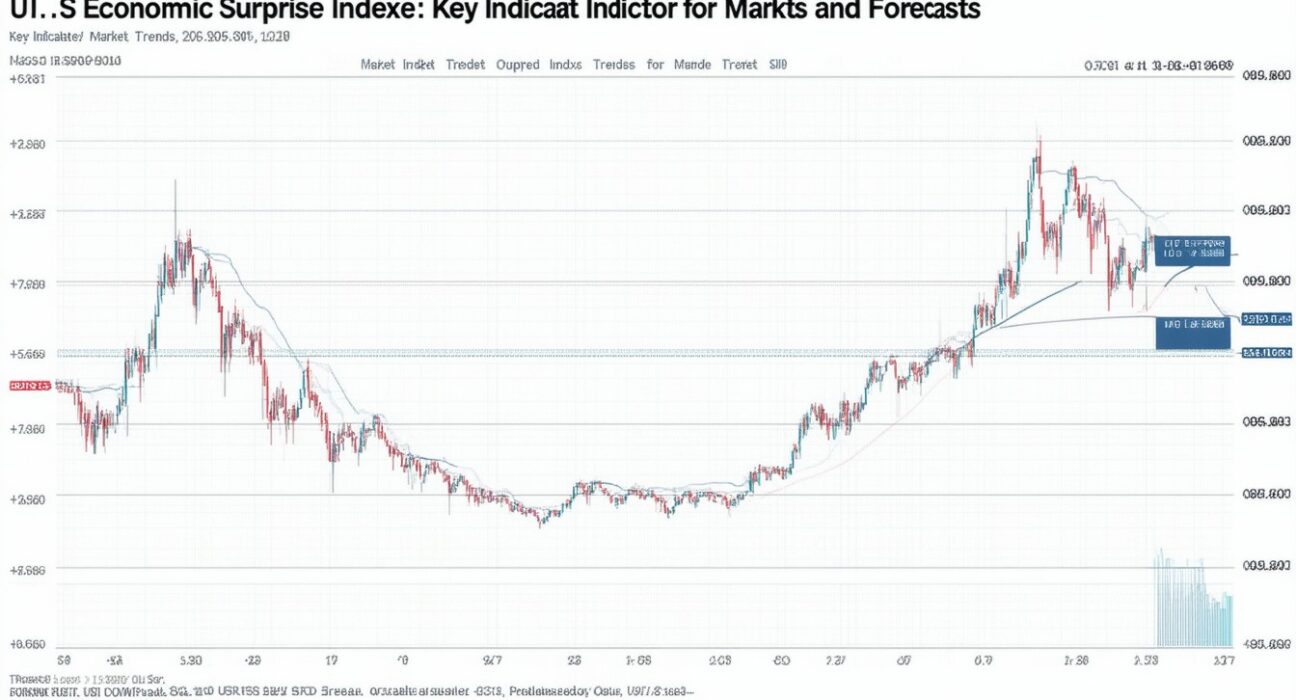
The US Economic Surprise Index (ESI) has become a touchstone for analysts, traders, and institutional investors looking to gauge the direction and momentum of America’s economic data relative to expectations. In financial markets, surprises—moments when actual outcomes diverge from consensus forecasts—can move asset prices swiftly. The ESI quantifies these surprise elements into a single, digestible number, offering an up-to-date sentiment pulse that often influences equity, bond, and currency markets.
As global uncertainty intensifies—from central bank decisions to unpredictable geopolitical events—investors increasingly rely on the ESI as both a risk-management tool and a market signal. But understanding how the index works, what it measures, and how to interpret its movements is crucial for using it effectively.
The Mechanics of the US Economic Surprise Index
How the Index is Calculated
At its core, the US Economic Surprise Index aggregates the results of major US economic reports—such as nonfarm payrolls, GDP growth, retail sales, and inflation—and compares each to the consensus estimate published prior to release. If actual data beats consensus, the surprise is positive; if it falls short, the surprise is negative.
These individual surprises are then standardized (adjusted for relative importance and historical volatility) and combined into a rolling index, typically calculated daily. This approach ensures that headline-making data—like jobs reports or Federal Reserve statements—have heavier sway than less market-moving releases.
Real-World Examples
When the US ESI turns sharply positive, it often reflects a string of economic data outperforming market forecasts. For example, a period of unexpectedly strong job growth and robust retail sales can push the index higher, suggesting that near-term sentiment is broadly upbeat.
Conversely, a plunge below zero often coincides with economic disappointments—such as a sequence of manufacturing slowdowns and weaker-than-expected inflation—which may trigger risk-off behavior in markets.
“The Economic Surprise Index is less about capturing the absolute health of the economy and more about the pulse of expectations versus reality,” says Marc Chandler, Chief Market Strategist at Bannockburn Global Forex. “In a market driven by perception, shifts in the index can be as pivotal as the data itself.”
Why the US Economic Surprise Index Matters for Markets
Interpreting the Signal
The ESI’s movements serve as a high-frequency indicator of whether analysts on Wall Street and the broader investment community are underestimating or overestimating the economy’s trajectory. A positive surprise index can instill confidence and fuel risk appetite, typically benefiting US equities and the dollar. Negative readings, meanwhile, can stoke fears of underperformance, supporting safe-haven assets such as Treasuries or gold.
Market Repercussions
Major investment banks, including Citigroup and Credit Suisse, publish and track variants of the ESI, pointing to its prominence in trading strategies. Hedge funds and proprietary trading desks may calibrate algorithms and asset allocations based on dramatic shifts in the index.
For instance, when the ESI remains elevated over weeks, it often correlates with bullish momentum in stock indexes like the S&P 500. On the other hand, a persistently negative surprise index can foreshadow corrections, as sentiment sours and investors seek protection.
Beyond the Headlines
While the ESI offers invaluable context, it’s not infallible. Sometimes, markets move on factors unrelated to economic data surprises, such as geopolitical risks or major policy changes. Additionally, a “mean reversion” pattern frequently emerges: a very high (or low) ESI tends to revert as expectations catch up with the new reality, prompting caution among experienced observers.
Strategic Use Cases for Economists and Investors
Portfolio Positioning
Professionals increasingly monitor the ESI to refine tactical bets across sectors and asset classes. During periods of persistent positive surprises, cyclical stocks—such as those in the financials or consumer discretionary sectors—may outperform. In contrast, a negative or declining ESI can signal a pivot toward defensive assets or tighter risk controls.
For currency traders, the index provides clues on potential USD strength or weakness. A strengthening ESI typically overlaps with a firmer dollar, as upbeat data surprise markets and boost US growth expectations.
Forecasting and Economic Models
Economic strategists also use the ESI as an input to GDP trackers and nowcasting models. When surprises cluster in one direction, it can prompt forecast revisions across the analyst community. For example, a series of upside inflation and employment surprises may lead economists to revisit interest rate projections, potentially triggering market repricing.
Challenges and Critiques of the Index
No indicator is flawless, and the Economic Surprise Index has its limitations. Critics point to its sensitivity to initial consensus estimates—which can themselves be subject to bias or error. In volatile periods, the index may swing excessively due to one-off data shocks.
Further, because the ESI is constructed with a focus on relative movement, it may present a positive reading even in a lackluster absolute economic environment—simply because news isn’t as bad as feared.
Despite these caveats, the ESI remains an effective lens for assessing market psychology and recalibrated expectations.
Conclusion: Translating Surprises into Strategy
The US Economic Surprise Index distills daily economic noise into a clear, actionable narrative about expectations, surprises, and market momentum. Investors attentive to its shifts can often anticipate broad moves in sentiment-driven markets, provided they contextualize ESI readings within a broader analytical framework.
As economic data releases accelerate and surprises carry ever-greater sway on asset prices, mastering the nuances of the ESI can yield a critical edge—whether for managing risk, seeking opportunity, or simply understanding the market mind.
FAQs
What does a positive US Economic Surprise Index mean?
A positive index indicates that recent US economic data has generally exceeded analysts’ forecasts, which often supports riskier assets and investor confidence.
How is the Economic Surprise Index calculated?
It aggregates a range of major economic reports, comparing each actual figure to prior consensus expectations, then standardizes and sums these differences over a rolling window.
Can the Economic Surprise Index predict stock market moves?
While it offers insight into market sentiment and momentum, the index should be used alongside other indicators, as market outcomes depend on many factors beyond economic data surprises.
Is the ESI relevant for global investors or only US-focused ones?
Though calculated for the US, international investors watch the index closely since US data can influence global asset prices and capital flows.
Why does the ESI sometimes revert after extreme highs or lows?
Extreme index readings tend to normalize as analysts adjust forecasts closer to actual conditions, reducing the likelihood of future surprises.
Are there Economic Surprise Indices for other regions?
Yes, similar indices are published for Europe, Asia, and other economies, allowing investors to compare surprise dynamics across regions.