


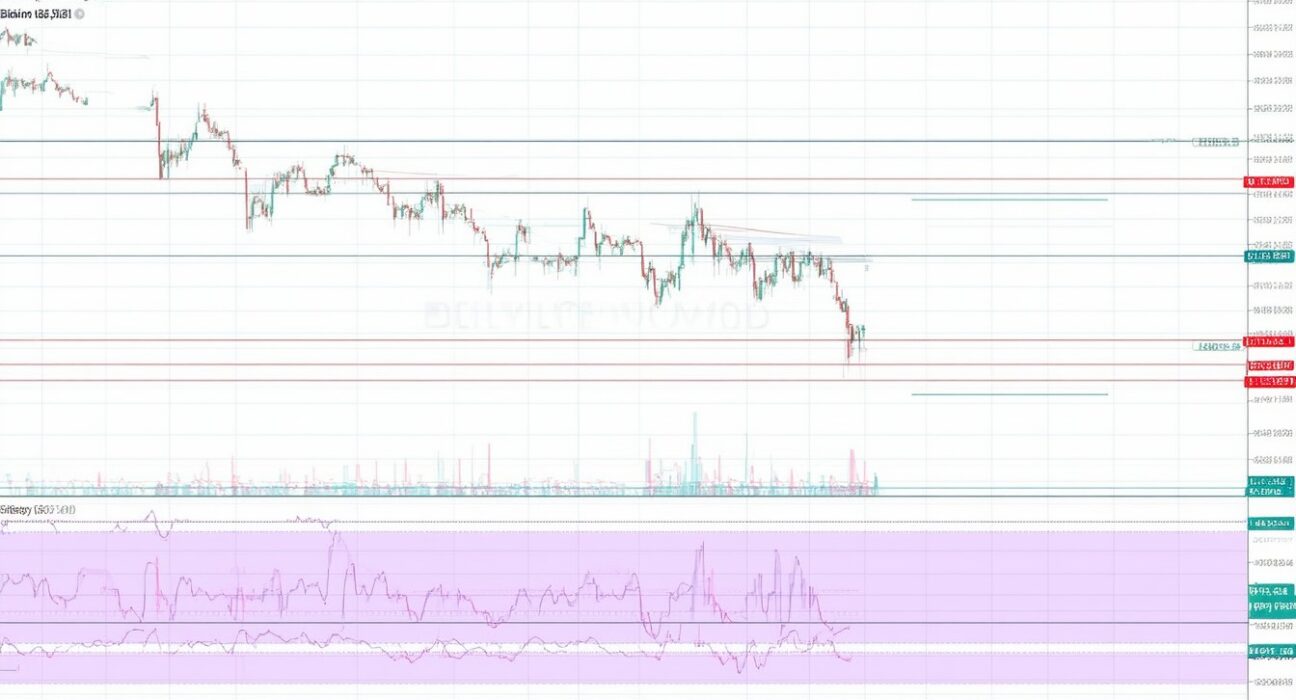
Bitcoin has long been seen as both a disruptive force in global finance and a volatile asset that keeps investors and institutions on their toes. Its price movements—tracked live every minute on exchanges everywhere—are watched as keenly as oil or gold. Understanding where Bitcoin’s price stands, how it got there, and where it might go next requires a look beneath the surface: delving into historical trends, catalysts, technical analysis, and influential narratives shaping the digital asset’s journey.
Understanding Live Bitcoin Price Data
Bitcoin’s price is not a fixed figure—it can shift dramatically within minutes. The price is an aggregate value determined by buy and sell orders on major exchanges, often expressed in USD or local currencies. Real-time charts reflect the consensus view, providing essential data points such as opening price, highest, lowest, and closing values for timeframes ranging from seconds to years.
Traders and analysts rely on these charts to gauge momentum and volatility, making use of:
- Candlestick patterns that reveal market sentiment
- Moving averages (e.g., 50-day, 200-day) to assess the trend direction
- Volume indicators to detect buying/selling intensity
Beyond technical aspects, liquidity and the diversity of exchange platforms can cause minor fluctuations in quoted prices. This makes it crucial for participants—from retail traders to institutions—to consult reputable sources and cross-reference data for precision.
Historical Price Trends and Major Catalysts
Bitcoin’s history is marked by explosive growth, deep corrections, and rapid rebounds. The first major rally occurred in 2013, when Bitcoin crossed $1,000 for the first time, fueled by surging interest and media attention. Since then, several key events have triggered significant price moves:
- 2017 Bull Run: Bitcoin climbed to nearly $20,000 amid a flurry of initial coin offerings (ICOs) and global retail speculation. Regulatory uncertainty soon led to a harsh correction.
- 2020–2021 Institutional Adoption: Corporate treasuries, led by companies like MicroStrategy and Tesla, began acquiring Bitcoin. This, coupled with increased acceptance by payment networks and a global move toward digital assets during the pandemic, drove prices above $60,000.
- 2022–2023 Market Turbulence: The failure of several crypto firms, including FTX, spooked markets and underscored systemic risks. Bitcoin’s price tumbled but demonstrated notable resilience as confidence gradually returned.
“The Bitcoin market is effectively a real-time referendum on global risk appetite, policymakers’ decisions, and technological evolution,” says Dr. Lea Brown, a digital asset strategist. “Every price swing tells a story far broader than just speculation.”
In effect, Bitcoin’s price action over time reflects a complex dance between technology-driven optimism, fear triggered by regulatory actions, and shifting macroeconomic forces.
Technical and Fundamental Analysis: Tools for Deciphering Price
Technical Analysis: Patterns, Indicators, and Prediction
Technical analysis remains the primary toolkit for short-term traders. By studying price charts and statistical trends, analysts attempt to forecast future movements and identify entry or exit points. Commonly used tools include:
- Relative Strength Index (RSI): Measures speed and change of price movements to identify overbought or oversold conditions.
- MACD (Moving Average Convergence Divergence): Spotting changes in momentum and potential reversals.
- Support and Resistance Levels: Historic price points where buying or selling pressure has previously emerged, often used for stop-loss or take-profit settings.
For instance, when Bitcoin’s price breaks above a well-established resistance level on heavy trading volume, it often triggers a fresh leg up as traders pile in.
Fundamental Analysis: Beyond the Charts
While technical analysis focuses on the charts, fundamental analysis looks at factors underpinning Bitcoin’s real-world value. Critical elements include:
- Network Activity: Metrics like the number of active addresses and transaction volume can signal growing adoption.
- Mining Dynamics: The Bitcoin halving—occurring every four years—cuts the new BTC entering circulation by half, often viewed as a bullish catalyst by reducing supply inflation.
- Macroeconomic Context: Interest rates, inflation expectations, and fiscal policy can significantly influence capital flows into cryptocurrencies.
Beyond raw data, narratives matter. For instance, global events—such as bank failures or spikes in inflation—often ignite renewed interest in Bitcoin as a “digital gold” or portfolio hedge.
Market Sentiment, Regulation, and Institutional Investment
No asset moves in a vacuum, and Bitcoin’s price is acutely affected by the collective mood of market participants and shifting regulatory winds.
Market Sentiment: The Power of Psychology
At times, price surges reflect a feedback loop: as prices rise, FOMO (fear of missing out) takes hold, drawing in new buyers and pushing valuations even higher. Conversely, extreme negative sentiment during drawdowns leads to mass capitulation, often creating oversold conditions ripe for reversal.
Regulation: The Double-Edged Sword
Regulatory developments—ranging from bans to legitimization by sovereign states—are a key variable. The U.S. Securities and Exchange Commission’s evolving stance on Bitcoin ETFs, for example, has caused substantial market swings. Even rumors of upcoming regulations can spur volatility as traders preemptively reposition.
Institutional Investment: Shaping a Maturing Market
The rise of institutional players has brought both credibility and greater price stability to the market. Large asset managers, pensions, and endowments have begun dipping into Bitcoin exposure, often via regulated vehicles such as ETFs or futures. This influx of capital, while still a minority compared to traditional categories, signals growing mainstream acceptance.
Real-World Scenarios: How Bitcoin Price Impacts Decision-Making
Consider the following scenarios illustrating how live Bitcoin price data influences real-world outcomes:
- Merchants accepting crypto: A rapid price drop may lead a retailer to hedge or instantly convert BTC to fiat to avoid losses.
- Remittance corridors: In countries facing currency devaluation, a rising Bitcoin price can incentivize families or businesses to move capital across borders using the network, bypassing traditional banking fees.
- Long-term investors (HODLers): Steep corrections are often viewed as buying opportunities, especially if underlying fundamentals remain intact.
The Future of Bitcoin Price Discovery
While short-term predictions remain fraught with uncertainty, the long-term drivers of Bitcoin’s price are clearer:
- Gradual mainstream adoption, including payment networks and e-commerce
- Continued innovation in blockchain scaling
- Global macroeconomic shifts toward digital assets
Institutional research generally supports the view that, despite volatility, Bitcoin’s unique properties—fixed supply, global accessibility, and decentralized trust—are likely to sustain its relevance as a speculative asset and potential store of value. However, future price trajectories will also hinge on regulatory clarity and ongoing improvements to market infrastructure.
Conclusion
Tracking the Bitcoin price requires more than real-time numbers—it’s about understanding the evolution of an asset shaped by innovation, regulatory shifts, and changing market psychology. From dissecting live chart patterns to weighing macro drivers, successful participants view Bitcoin not just as a currency or a commodity, but as a signal for broader economic transformation. Staying informed, practicing risk management, and adopting a holistic perspective are crucial as Bitcoin charts its course in an increasingly digital world.
FAQs
What factors influence the Bitcoin price?
Bitcoin’s price is influenced by demand and supply, global economic trends, regulatory developments, and market sentiment. Institutional adoption and technological upgrades also have significant impacts.
Why does the price of Bitcoin vary between exchanges?
Differences in liquidity, trading volume, and exchange-specific order books can create minor price gaps. Arbitrage trading typically keeps these differences small.
How do major events affect Bitcoin’s price?
Market-moving events—such as regulatory announcements, major hacks, or institutional investment news—can trigger rapid price swings due to changing investor confidence and capital flows.
Is technical analysis effective for predicting Bitcoin price movements?
Technical analysis helps identify trends and potential turning points, but its effectiveness depends on broader market conditions and should be complemented by fundamental analysis for more robust decisions.
Can Bitcoin price reach new highs again?
While past performance does not guarantee future results, many analysts believe that adoption, innovation, and evolving policy frameworks could support future rallies. However, risks and volatility remain ever-present.
Where can I see a live Bitcoin price chart?
Most major crypto exchanges and financial news platforms provide live Bitcoin price charts, complete with technical indicators and real-time updates. Reliable sources include Coinbase, Binance, and TradingView.