


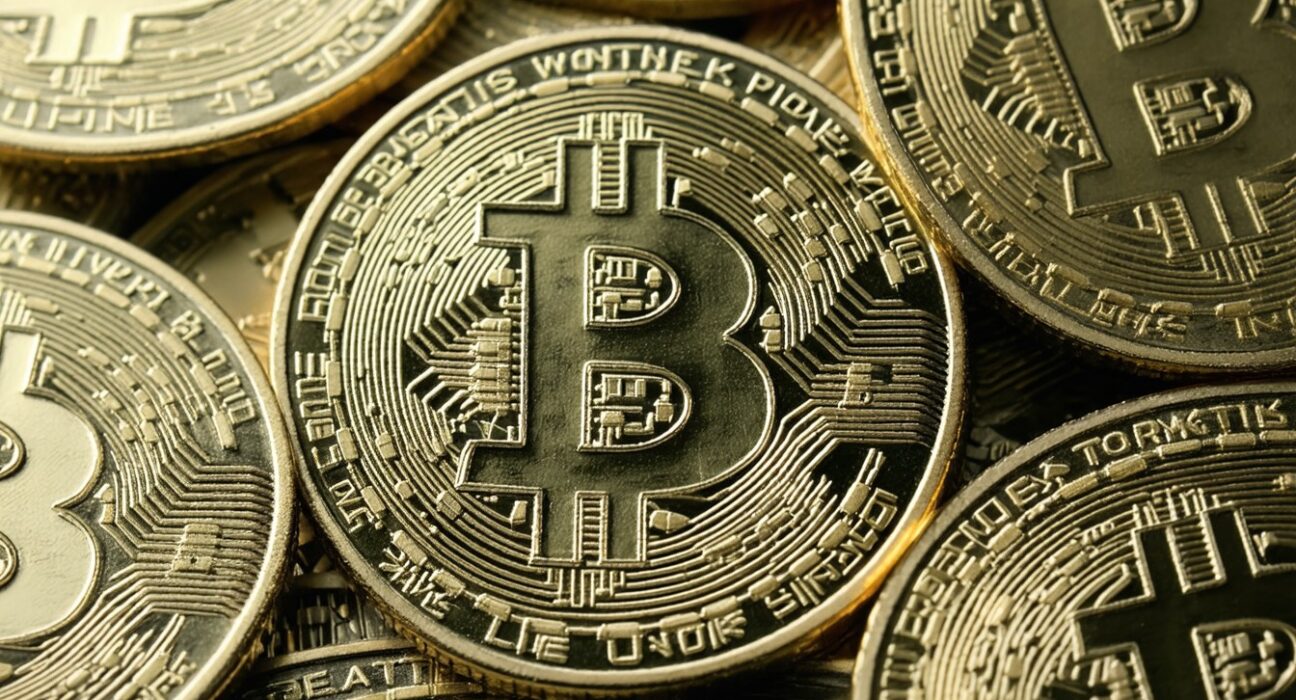
Bitcoin is one of the most revolutionary and debated innovations in modern finance, standing at the crossroads of technology, economics, and global policy. Since its inception in 2009, Bitcoin has captivated investors, technologists, regulators, and the public with its promise of decentralized currency unbound by traditional banking or government control. As it approaches mainstream awareness, understanding what Bitcoin is, how it works, and why it matters is crucial in deciphering the future of digital money.
What Is Bitcoin? Defining the Digital Currency
Bitcoin is a digital currency, or cryptocurrency, designed to operate without a central authority such as a government or financial institution. The concept was introduced by the pseudonymous Satoshi Nakamoto in a 2008 white paper titled “Bitcoin: A Peer-to-Peer Electronic Cash System.” Unlike traditional currencies, Bitcoin is entirely virtual—there are no physical coins or notes. It runs on blockchain technology, a distributed ledger that records all transactions securely and transparently.
At its core, Bitcoin enables individuals to transfer value online without intermediaries. Users can send and receive Bitcoin globally, and the process is governed by cryptographic algorithms that ensure security and authenticity. Transactions are verified by a network of nodes, and once confirmed, they become part of an immutable public record.
“Bitcoin fundamentally changes our relationship with money—from something closely tied to geographic and political boundaries, to an open protocol accessible to anyone with an internet connection,” explains Dr. Garrick Hileman, Head of Research at Blockchain.com.
How Bitcoin Works: Blockchain and Mining Explained
The architecture of Bitcoin rests on two key technological pillars: the blockchain and mining.
The Blockchain: Distributed Public Ledger
The blockchain is a decentralized database maintained by participants worldwide. Each “block” contains a set of transaction records, and these blocks are cryptographically linked in sequential “chains,” making the entire history of transactions tamper-resistant. Every user can inspect this public ledger, ensuring overall transparency.
This blockchain structure means no central point of failure exists, and no single entity can retroactively change transaction records. As a result, confidence in Bitcoin’s integrity does not rely on trust in a third party.
Mining: Securing the Network
Mining is the process by which new Bitcoins are created and transactions are validated. Miners use powerful computers to solve complex mathematical problems. When a miner successfully verifies a batch of transactions, they add a new block to the blockchain and are rewarded with newly minted Bitcoin.
The rate at which new bitcoins are released is halved roughly every four years—a process known as the “halving.” This gradual issuance creates artificial scarcity, mimicking precious metals like gold and underpinning Bitcoin’s “store of value” narrative.
Wallets and Private Keys
Unlike bank accounts, Bitcoin ownership is recorded on the blockchain, but access to coins is controlled through “wallets” and cryptographic “private keys.” Anyone with the private key to a Bitcoin wallet can send its funds, underscoring the responsibility required for self-custody.
Why Bitcoin Matters: Use Cases, Investment, and Critics
While Bitcoin’s technical mechanics have drawn interest from developers and cryptographers, its societal impact comes from the use cases it unlocks—and the controversies it sparks.
Digital Gold and Store of Value
Many investors refer to Bitcoin as “digital gold.” Like gold, it is finite in supply (capped at 21 million coins) and seen as a hedge against inflation and currency devaluation. Since the early 2010s, institutional investors and fund managers have begun to allocate small portions of portfolios to Bitcoin, recognizing its potential role as an alternative asset.
In 2021, El Salvador became the first nation to declare Bitcoin legal tender, marking a pivotal experiment in state-level cryptocurrency adoption. Meanwhile, US-based Bitcoin ETFs (exchange-traded funds) have made it easier for mainstream investors to gain exposure.
Borderless Payments and Financial Inclusion
Bitcoin’s statelessness allows individuals to send funds across borders almost instantly, bypassing traditional banking rails. This can benefit those in countries with unstable currencies, limited access to financial services, or strict capital controls. Remittances made with Bitcoin can reduce dependence on costly intermediaries involved in global money transfers.
Criticisms and Controversy
Bitcoin also has detractors, chiefly due to concerns about its energy consumption, price volatility, and illicit transactions. Mining Bitcoin consumes significant electricity, prompting environmental debates, especially in regions relying heavily on fossil fuels. Furthermore, Bitcoin’s price swings—sometimes double-digit percentage moves in hours—can deter those seeking stable, everyday currency.
Major regulators have voiced caution about speculative bubbles, and some governments have pursued partial or outright bans. Still, the evolving regulatory environment suggests that Bitcoin is unlikely to simply disappear; rather, its role will continue to adapt.
Security, Regulation, and the Road Ahead
Bitcoin’s future depends on balancing innovation with effective oversight.
Security Strengths and Risks
The Bitcoin blockchain is widely considered highly secure due to its decentralized architecture and the enormous computational power required to compromise it. Still, attacks on cryptocurrency exchanges and user-wallet phishing remain persistent threats, underscoring the need for robust security practices.
Regulatory Landscape
Governments worldwide grapple with how to classify and regulate Bitcoin. Some nations, such as the United States and members of the European Union, have introduced frameworks to treat Bitcoin as a form of digital property or assets subject to capital gains rules. Other countries have issued explicit warnings or prohibitions against its use. Meanwhile, discussions continue on how to integrate anti-money laundering (AML) and know-your-customer (KYC) measures without undermining the technology’s core principles.
Technological Developments
Bitcoin continues to undergo innovation. Layer-2 solutions like the Lightning Network are addressing scalability and transaction speed, enabling near-instant, low-fee payments for small or everyday transactions. Major brands have begun experimenting with Bitcoin payments, and interest from traditional financial institutions remains strong.
Conclusion: The Enduring Impact of Bitcoin
Bitcoin’s genesis marked a new chapter in the evolution of money. Its decentralized model, open-source codebase, and community-driven governance have challenged long-standing assumptions about who can create and control currency. While critics highlight volatility and ecological impact, supporters see Bitcoin as a necessary innovation in the digital age.
As digital finance grows ever more complex, Bitcoin’s continued maturation will shape debates across economics, regulation, and technology. Those watching the space would do well to remain informed—not only about price movements, but about the systemic transformations this remarkable technology might yet bring.
FAQs
What is the main purpose of Bitcoin?
Bitcoin was designed as a decentralized, peer-to-peer digital cash system to enable secure and transparent online value transfers without relying on banks or governments.
How do people acquire Bitcoin?
Bitcoin can be obtained through cryptocurrency exchanges, direct peer-to-peer transactions, ATMs, or by earning it via mining, where users validate transactions and maintain the network.
Is Bitcoin anonymous?
Bitcoin transactions are pseudonymous. Identities are not directly tied to addresses, but all transactions are publicly traceable on the blockchain, and various tools can link addresses to real-world identities.
Can Bitcoin be used to buy goods and services?
Yes, a growing number of merchants worldwide accept Bitcoin, either directly or through payment processors that convert it to local currencies. However, adoption varies by region and industry.
Why does Bitcoin’s price fluctuate so much?
Bitcoin’s value depends on market supply and demand, speculation, regulatory news, and macroeconomic conditions, leading to frequent and sometimes dramatic price swings compared to traditional currencies.
Is Bitcoin legal everywhere?
Bitcoin’s legal status varies widely. Some countries embrace it with regulated frameworks, others restrict or ban it, and many are still defining their approach to cryptocurrency regulation.