


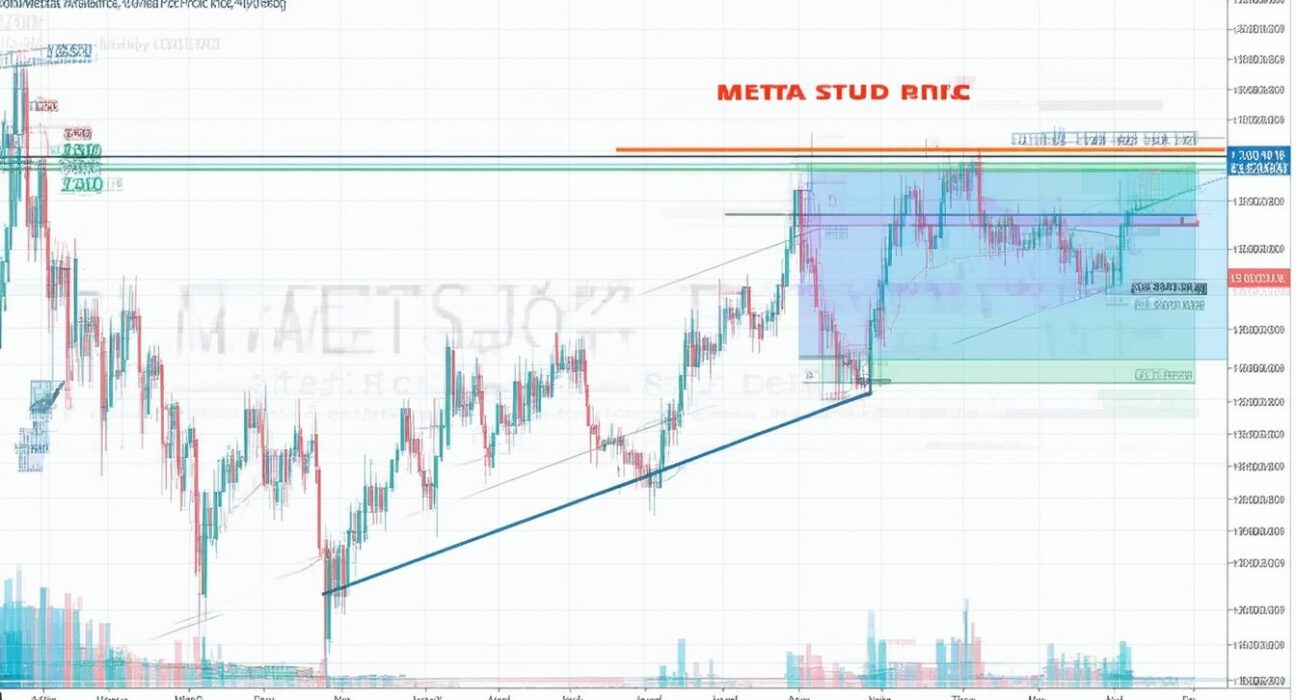
Meta Platforms, formerly Facebook, Inc., continues to command significant attention from investors and analysts alike. As the parent of some of the world’s most influential social technologies—including Facebook, Instagram, WhatsApp, and the ambitious metaverse initiatives—the company’s stock price often reflects not just financial performance but broader shifts in digital culture and advertising. The evolution of Meta stock, its performance trends, and the latest news surrounding this tech titan offer a lens into how innovation meets market realities in the digital age.
Meta Stock Price Performance: Patterns, Peaks, and Pivots
Historical Performance and Volatility
After its IPO in 2012, Meta stock (traded as META on NASDAQ) transitioned from early skepticism to one of the most closely watched equities on the market. The company has navigated numerous inflection points, ranging from privacy scandals and regulatory headwinds to bold investments in virtual reality and artificial intelligence.
While early years saw steady appreciation as Facebook cemented its dominance in social media, more recent periods have introduced higher volatility. Meta’s ambitious pivot toward the metaverse in late 2021, coupled with macroeconomic pressures and shifting digital advertising budgets, contributed to sharp fluctuations in stock price. Despite these swings, Meta has consistently maintained a leading market capitalization among technology companies.
Driving Factors Behind Price Movements
Several core elements shape the trajectory of Meta stock:
-
Advertising Revenue: Meta’s primary income stream remains digital advertising. Fluctuations in global ad spend—such as declines during periods of economic uncertainty—almost immediately impact quarterly earnings and, by extension, investor sentiment.
-
Product Ecosystem Growth: Continued expansion and user engagement across Meta’s platforms contribute to its perceived value. For instance, Instagram’s evolution into a commerce and creator platform has supported overall revenue growth.
-
Innovation and R&D: The company invests heavily in emerging technologies, notably generative AI and VR/AR for its Reality Labs segment. While these bets are long-term in nature, they can cause short-term concerns about profitability.
“Investors recognize Meta’s duality: it’s both a cash-generating ad juggernaut and an ambitious innovator willing to make bold, risky moves. This blend drives the market’s fascination—and occasionally, its anxiety—with the stock.” — Tech equities analyst, MarketPulse Strategies
Recent Performance: Recovery and Rally
In the aftermath of significant market corrections in late 2022 and early 2023, Meta stock staged an impressive comeback. Multiple factors drove this rally: stronger-than-expected earnings results, cost-cutting measures, renewed growth in digital ad revenue, and a strategic focus on efficiency.
Analysts have noted that Meta’s disciplined expense management in 2023, including workforce reductions and streamlined operations, reinvigorated investor confidence. Meanwhile, the rebound in online advertising—especially as brands recalibrated their budgets post-pandemic—provided much-needed tailwinds.
Latest News and Strategic Moves Shaping Meta Stock
Advancements in Artificial Intelligence and Automation
Meta’s recent investments in large language models and AI-driven content moderation signal a forward-looking vision. By integrating advanced AI into content delivery, ad targeting, and community management, Meta aims to secure its core business while opening new growth avenues. Initiatives such as Meta AI Studio and open-source Llama models have sparked industry-wide interest and partnerships.
Reality Labs and the Metaverse Initiative
The company’s multi-billion-dollar plans for metaverse technologies remain both a promise and a puzzle for investors. While Reality Labs has reported substantial operating losses, Meta leadership argues that these investments are foundational for long-term competitiveness.
Critically, Meta’s new hardware releases, such as the Quest 3 headset and advances in spatial computing, serve as tangible proof points—but widespread adoption remains several years away. Investors have responded variably: some view these moves as visionary, while others remain fixated on short-term profit impacts.
Regulatory and Privacy Challenges
Meta stock also reacts to regulatory scrutiny and privacy debates. Changes in global data regulations—like the EU’s Digital Markets Act or Apple’s iOS privacy restrictions—impact Meta’s ability to target ads and collect data effectively. In recent quarters, Meta has adapted by developing its own privacy-centric ad products and diversifying revenue streams.
Mergers, Acquisitions & Market Expansion
Beyond its core operations, Meta continues to eye strategic acquisitions in AI, augmented reality, and social commerce. Notably, its expanding footprint in India, Southeast Asia, and Africa points to user growth potential beyond saturated Western markets.
Meta Stock Analysis: Expert Perspectives and Market Sentiment
Analyst Ratings and Earnings Outlook
Meta stock routinely garners “buy” or “strong buy” ratings from major Wall Street institutions. The consensus points to high growth potential—especially as Meta recaptures digital advertising share and operational efficiency improves. Yet, concerns linger about the rate of Reality Labs spending and the long-term ROI of metaverse and AI bets.
Notably, analysts emphasize key metrics such as daily and monthly active users, average revenue per user (ARPU), and free cash flow. Meta’s recent performance has exceeded expectations in several areas, although some warn of tougher year-over-year comparisons ahead.
Institutional and Retail Investor Moves
Meta remains a top holding among institutional investors—index funds, pension funds, and global technology ETFs. In parallel, retail investors continue to trade Meta stock actively, especially around earnings announcements and product launches.
Industry observers suggest that Meta’s outsized influence on the NASDAQ and S&P 500 renders its stock price movements a bellwether for the broader tech market.
Key Risks and Opportunities for Meta Stock Investors
Risks to Monitor
- Macroeconomic volatility: Fluctuating interest rates and consumer sentiment could affect ad budgets.
- Regulatory actions: Future antitrust cases or privacy laws could constrain Meta’s business model.
- Execution risk: Large, long-horizon projects in AI and the metaverse carry uncertainty and potential for extended losses.
Growth Catalysts
- AI-driven advertising: Advanced targeting could boost ad yields and engagement.
- New markets and demographics: Expansion outside North America and Europe brings upside potential.
- Vertical integration: Owning more of its stack—from hardware (Quest) to AI infrastructure—could improve margins and resilience.
Conclusion: Navigating Meta’s Dual Future
Meta Platforms stands at a crossroads where stable, cash-rich social platforms meet visionary yet costly bets on future technology. Stock price dynamics continue to reflect this tension, with recent rallies underscored by operational discipline and resilience in digital advertising. Investors should balance near-term earnings trends with Meta’s potential to shape the next era of the internet—always with an eye on evolving risks and global regulatory changes.
FAQs
What are the main drivers impacting Meta stock price?
Meta’s stock price is shaped by factors such as digital advertising revenue, user growth across its social platforms, innovation in AI and the metaverse, and global regulatory trends.
How does Meta’s investment in AI affect its overall performance?
Investments in AI improve ad targeting, power new products, and position Meta at the forefront of emerging technologies, although they require significant upfront spending.
Is Meta stock considered a growth or value investment?
Meta is typically seen as a large-cap growth stock thanks to its strong revenue growth profile; however, recent cost-cutting measures have infused value-focused traits as well.
What risks should long-term Meta investors consider?
Key risks include global regulation, competitive threats from other tech giants, privacy challenges, and uncertainty concerning returns from large-scale projects like the metaverse.
Has Meta’s focus on the metaverse paid off yet?
While Meta has made progress in hardware and platform development, the metaverse business remains in investment mode, with profits expected to materialize over a longer horizon.
Are there upcoming catalysts that could impact Meta stock?
Potential catalysts include new product launches, advances in AI, positive advertising trends, and strategic partnerships or acquisitions aimed at global expansion.