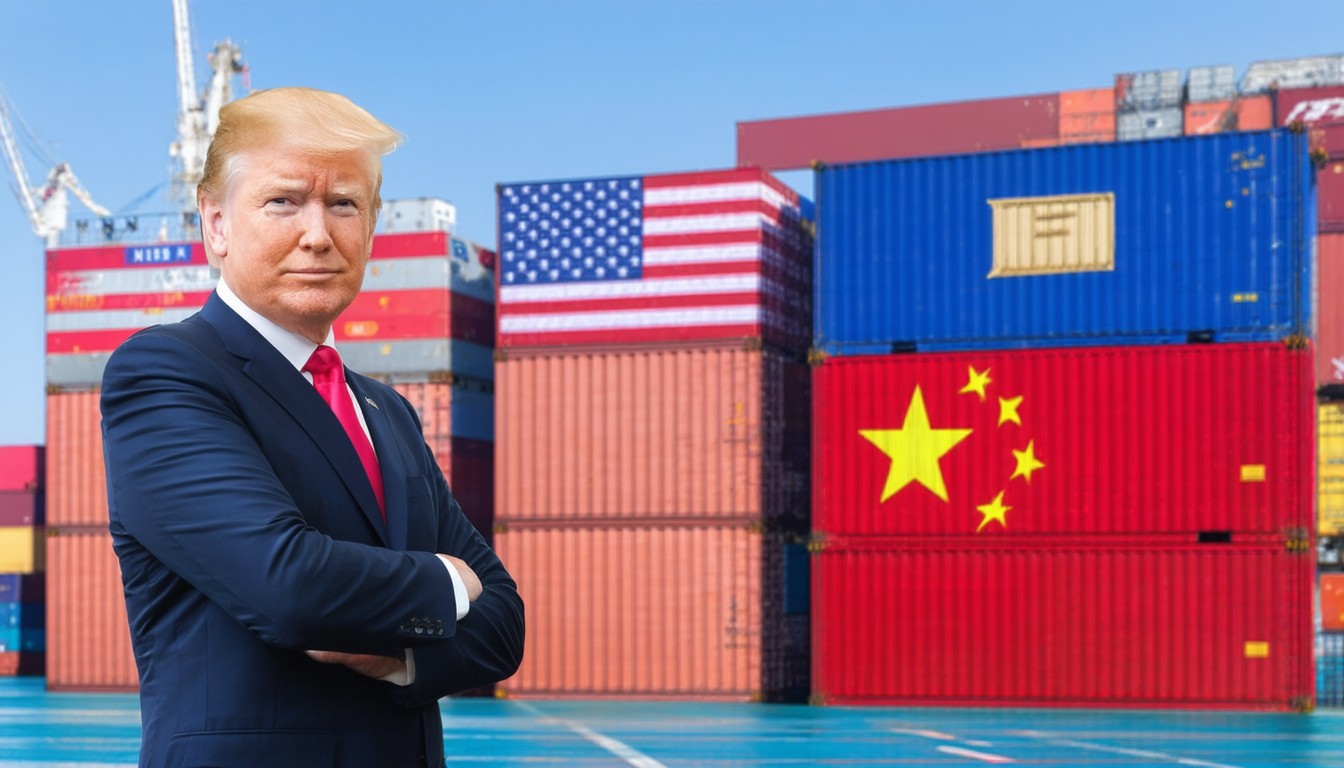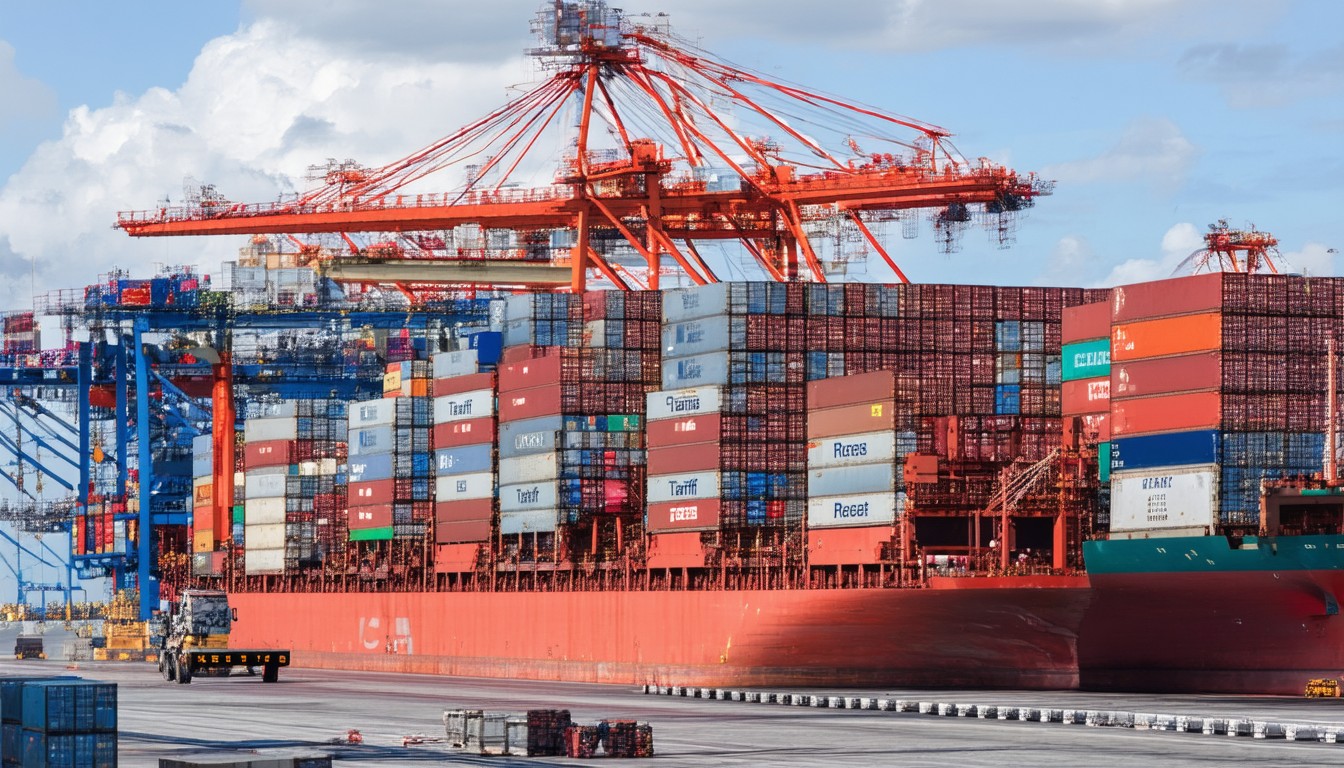


The trade relationship between the United States and China stands as a pivotal axis of the global economy. Over the past decade, negotiations between the two powers have ebbed and flowed, closely watched by governments, markets, and manufacturers worldwide. While disputes over tariffs, technology transfers, and intellectual property capture headlines, the stakes run deeper—affecting supply chains, global financial markets, and economic growth prospects for both developed and emerging nations.
Recent rounds of US-China trade talks have unfolded in a world increasingly marked by geopolitical rivalries, technology races, and shifting trade patterns. Rather than a linear progression, the talks have become a barometer reflecting broader strategic competition and the challenges of global economic interdependence.
Key Issues Shaping US-China Trade Talks
Tariffs and Retaliation: The Ongoing Tug-of-War
Tariffs have been both a weapon and a bargaining chip in the US-China trade relationship. Since 2018, each side has imposed waves of tariffs on hundreds of billions of dollars’ worth of imported goods. Sectors ranging from agriculture to semiconductors have faced higher costs and unpredictable demand.
While some tariffs remain in effect, intermittent rollbacks have signaled attempts at de-escalation. For example, the 2020 “Phase One” deal required China to increase purchases of American farm goods, while the US reduced certain tariffs. Yet, implementation has proven mixed. According to the Peterson Institute for International Economics, China has not fully met its pledged purchase targets.
“Tariffs and counter-tariffs have not only disrupted trade flows but have also increased uncertainty for businesses and consumers across the globe,” notes Dr. Mary Lovely, senior fellow at the Peterson Institute. “The unpredictability of these measures can chill investment, making supply chain planning extremely difficult.”
Intellectual Property and Technology Transfer
Concerns over intellectual property (IP) theft, forced technology transfer, and lack of market access are central to US complaints. American firms have long argued that operating in China often means surrendering proprietary technology as a de facto cost of entry.
China, for its part, has resisted changes that could weaken its industrial policy, particularly in high-tech sectors prioritized under its “Made in China 2025” strategy. While Beijing has pledged incremental reforms, meaningful progress on IP protection and fairer rules for foreign companies remains a sticking point in negotiations.
Trade in Services and Digital Commerce
Beyond goods, the US seeks expanded access for its financial, educational, and tech companies in China’s vast consumer market. Conversely, China wants greater acceptance for its tech giants on the global stage. With digital trade booming, rules on cross-border data flows, cybersecurity, and regulatory transparency are increasingly on the agenda.
The challenge lies in reconciling fundamentally different governance models and approaches to data privacy—a difference seen vividly in debates over apps like TikTok and WeChat, or in restrictions on US chip technology exports.
Human Rights, Supply Chain Security, and Broader Geopolitical Tensions
Recent years have seen issues such as human rights and national security become intertwined with trade talks. US measures targeting Xinjiang cotton and goods allegedly linked to forced labor, as well as export controls on sensitive technologies, reflect a broader effort to align trade policy with democratic values and strategic priorities.
China, meanwhile, views many US moves as efforts to curtail its economic rise, deepening mistrust. This backdrop makes purely economic trade negotiations more complex, with non-tariff barriers and compliance monitoring now standard features of new agreements.
The Global Ripple Effect: How Talks Shape the World Economy
Impact on Global Supply Chains
US-China trade talks have fundamentally redrawn supply chain maps. Companies from electronics assemblers in Vietnam to automakers in Mexico have diversified sourcing strategies to reduce reliance on either nation. While “decoupling” is rarely total, there is a demonstrable shift toward “China+1” models, particularly for sectors vulnerable to disruptions.
Global consulting firm McKinsey has reported that the proportion of North American and European companies planning to diversify their supplier base has increased significantly since 2019, in direct response to the US-China trade uncertainty.
Reactions from Third-Party Economies
Nations in Southeast Asia, Mexico, and parts of Eastern Europe have benefitted from trade diversion, capturing investment previously destined for China or the US. This realignment has driven up their exports but also challenged infrastructure and labor capacities.
On the other hand, commodity exporters—such as Brazil and Australia—have found new windows to step in where US-China trade friction leaves shortfalls (for example, soybeans and coal). However, this can expose them to political crossfire if relationships with either power sour.
Influence on Global Markets and Growth
Major financial markets react swiftly to developments in US-China trade talks. Announcement of additional tariffs has repeatedly triggered volatility in global equities, fixed income, and currency markets. The International Monetary Fund has warned that persistent tensions between the two powers could shave points off global GDP growth, particularly if uncertainty dampens business investment and slows technology diffusion.
Progress, Stalemate, and New Negotiation Dynamics
Assessing Outcomes of Recent Talks
The “Phase One” agreement in January 2020 marked a tentative breakthrough but left deeper issues unresolved. COVID-19 disruptions further complicated implementation, with both sides missing certain purchase targets and follow-on talks stalling or shifting to new fronts.
As of mid-2024, the approach has shifted toward “managed competition” rather than seeking sweeping comprehensive deals. Dialogue forums blend trade, technology, and security concerns, making negotiations more complex but also more reflective of the true scope of the relationship.
The Strategic Context: Competition Without Rupture
With both economies highly interdependent, a full-scale trade decoupling remains unlikely. However, selective “de-risking”—reducing vulnerability in critical sectors like semiconductors, energy, and communications—has become the new watchword.
Diplomatic analysts observe that the tone of the talks has matured from confrontation to guarded pragmatism, with both Washington and Beijing balancing domestic pressures against the risks of escalation.
Conclusion: Navigating Complexity in US-China Trade Relations
The US-China trade talks have become a centerpiece of global economic diplomacy, shaping not just bilateral trade but also the contours of globalization itself. While breakthroughs are possible—particularly on tariff relief and sector-specific access—long-standing differences over intellectual property, digital commerce, and national security are likely to persist.
For multinational businesses, policymakers, and investors, close attention to the evolving rhythm of these talks is vital. Supply chain strategies, market access, and global investment patterns will continue to hinge on the outcome of even incremental progress at the negotiation table. Balancing competitive pressures with areas of unavoidable cooperation will test the diplomatic and economic skills of both sides for years to come.
FAQs
What are the main issues in US-China trade talks?
Key areas include tariffs, intellectual property protection, technology transfer, market access, and rising concerns over digital trade and national security.
How do these trade talks affect the global economy?
They influence global supply chains, shift investment flows, and add uncertainty to markets—affecting prices, production decisions, and long-term economic growth worldwide.
What progress has been made since the trade war began?
While the “Phase One” deal eased some tariffs and included Chinese purchasing commitments, deep-rooted disputes over tech and regulatory fairness remain unresolved.
How have other countries been impacted by US-China tensions?
Many countries have gained from trade diversion, attracting new investment or export opportunities. Others face challenges from increased volatility or pressure to align with one major partner.
Is a full decoupling of US and Chinese economies likely?
Comprehensive decoupling is currently unlikely due to deep interdependence, but selective “de-risking” in sensitive sectors is accelerating.
What is the future outlook for US-China trade relations?
Expect ongoing, sometimes incremental negotiations, with periodic breakthroughs. Political, technological, and security concerns will continue to intertwine with trade policy decisions.