

The price of XRP—Ripple’s native digital asset—remains a focal point for crypto traders, institutional investors, and regulators alike. As the global cryptocurrency market experiences renewed volatility, XRP stands out due to its unique legal history, use case within remittances, and ever-changing tokenomics. Understanding XRP price movements in context requires examining recent trends, technical analysis, macroeconomic factors, and ongoing regulatory developments.
Recent XRP Price Performance: Navigating a Volatile Market
XRP has historically demonstrated above-average volatility compared to both major cryptocurrencies like Bitcoin and Ethereum, and mid-cap digital assets. Over the past year, XRP’s price has experienced multiple sharp swings corresponding with regulatory decisions and broader market sentiment. For instance, the July 2023 partial legal victory for Ripple in its long-standing case with the U.S. Securities and Exchange Commission (SEC) triggered a rally of more than 70% in a matter of days—though much of those gains were later retraced as bullish momentum faded.
Key short-to-medium-term price drivers include:
- Legal Milestones: Regulatory clarity remains a top driver. Any updates from the SEC case—or comparable global frameworks—invariably impact XRP’s price.
- Market Liquidity: XRP continues to be listed on major global exchanges, with surges in trading volume often preceding notable price swings.
- Broader Crypto Trends: XRP usually tracks the sentiment of the wider crypto market, often lagging behind Bitcoin but sometimes outperforming during market-wide rallies spurred by positive news.
Many traders note that whales—large XRP holders—can have a significant impact on price movement, amplified during periods of thin liquidity and heightened volatility.
Technical Analysis: Chart Patterns and Key Levels
A technical analysis of XRP price reveals distinguishable patterns and critical support and resistance levels that traders monitor closely:
Short-Term Indicators
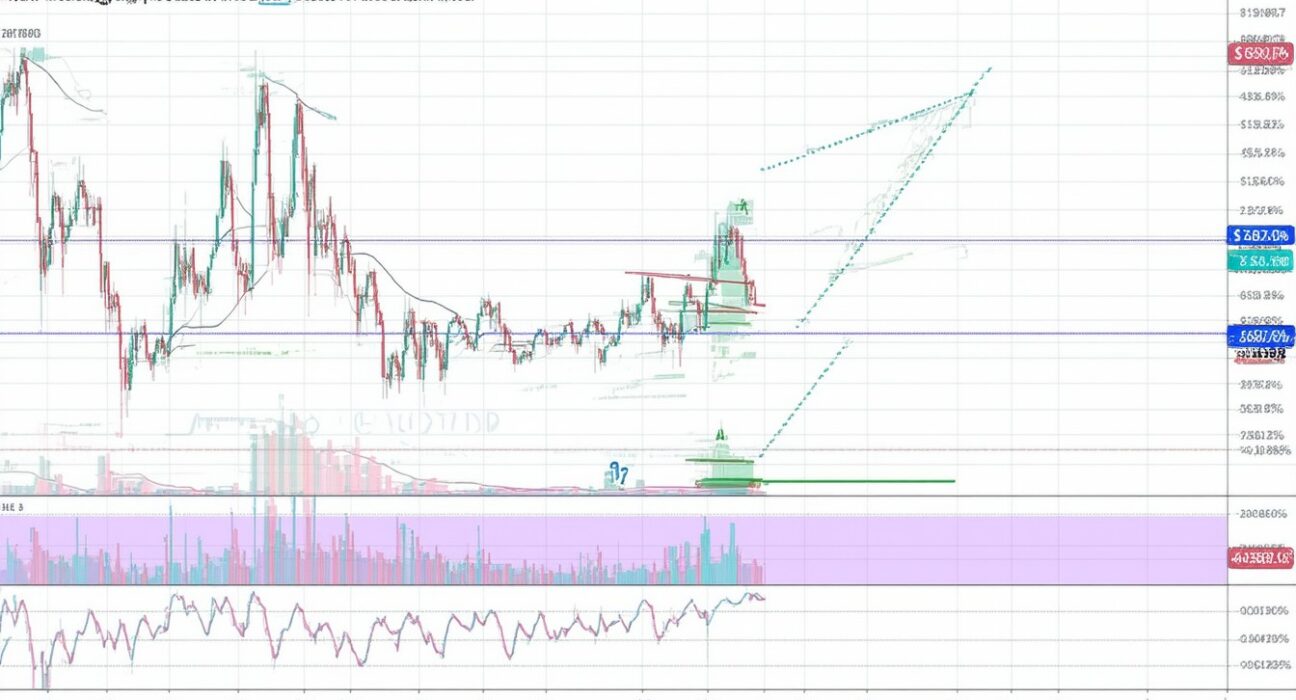
- Moving Averages: The 50-day and 200-day simple moving averages consistently act as dynamic support and resistance. Crossovers between these averages often lead to sharp directional moves.
- Relative Strength Index (RSI): RSI values above 70 frequently signal overbought conditions, while readings below 30 indicate oversold zones. XRP has oscillated between these extremes during several high-profile news events.
Long-Term Considerations
- Descending Triangle and Breakout Potential: Over the past two years, XRP’s price has mostly consolidated in a descending triangle formation, with resistance near the $0.80–$1.00 level. A confirmed breakout above this could set the stage for renewed bullish sentiment.
- Volume Analysis: Sustained moves with increasing spot volume are typically viewed as more credible, a key factor for traders wary of short-lived price spikes.
According to digital asset analyst Mark Petty,
“XRP’s price behaves differently than many altcoins due to the weight regulatory narratives carry. Chart signals can be muted or amplified overnight, depending on headlines, making discipline and risk management essential for technical traders.”
Fundamental Factors: Ripple’s Ecosystem and Adoption Strength
Beyond chart analysis, XRP’s underlying fundamentals play a significant role in shaping investor confidence and projecting price stability.
Core Use Case: Cross-Border Payments
RippleNet continues to partner with major financial institutions worldwide, leveraging XRP as a bridge asset for near-instant, low-cost international transfers. Recent collaborations in Asia and the Middle East highlight both the opportunity and real-world demand for blockchain-powered remittance services.
Tokenomics and Circulating Supply
Unlike some cryptocurrencies with fixed supplies, a substantial proportion of XRP remains locked in escrow, released monthly by Ripple to ensure stability. This approach aims to balance ecosystem growth with inflation control—a factor critical to long-term price sustainability.
Legal and Regulatory Headwinds
The SEC vs. Ripple lawsuit has cast a long shadow over XRP trading, particularly for U.S.-based investors. While July 2023’s partial summary judgment clarified that XRP is generally not a security in secondary market transactions, ongoing appeals and global regulatory ambiguity continue to influence both sentiment and price.
XRP Price Prediction: Scenarios and Critical Catalysts
Prognosticating future XRP prices involves balancing optimism with caution. Various scenarios could play out depending on external and internal catalysts.
Bullish Outlooks
- Further Regulatory Clarity: A definitive, favorable legal outcome in the U.S. could unlock institutional investment and potential relisting on previously cautious exchanges.
- Expanded Enterprise Adoption: New partnerships in high-value corridors, especially within global banking, could increase on-chain utility and demand for XRP.
Bearish Risks
- Adverse Regulatory Decisions: Any negative appeals judgment or unfavorable global regulation could pressure price, particularly if exchanges are again forced to suspend trading.
- Crypto Market Downturn: Macro-economic shocks or a broader digital asset bear market would likely drag XRP down irrespective of individual project developments.
Price Targets
Many crypto analysts forecast that, if both regulatory and market tailwinds align, XRP could attempt to retest its previous highs seen in early 2018. More conservative models anticipate a gradual appreciation, with stiff resistance at the psychologically significant $1 level unless accompanied by sustained news flow or adoption milestones.
Market Sentiment, Community Trends, and Industry Perspectives
The XRP community is among the most active and resilient in the crypto sphere, fostering ongoing debate about price predictions and longer-term value. Social media platforms often amplify both bull and bear arguments, particularly during periods of high volatility.
Industry observers note that XRP’s unique positioning—institutional focus, legal drama, and scalability—continues to attract both speculation and serious investor interest.
“In a landscape where hype often overshadows fundamentals, XRP’s narrative is shaped by real utility and real risks. That’s what keeps it in the spotlight, for better or worse,” remarks fintech strategist Alicia Kim.
Concluding Summary
XRP’s price trajectory reflects a dynamic interplay of technical setups, fundamental innovations, and regulatory milestones. While rapid, news-driven swings are likely to persist, the long-term value proposition hinges on broader market adoption and sustained legal clarity. Investors should continuously monitor both on-chain data and headline developments, remaining mindful that the nature of XRP’s ecosystem rewards both disciplined analysis and nimble risk management.
FAQs
What factors most influence the price of XRP?
Legal developments, especially those related to securities regulation, have a major impact. Market sentiment, liquidity, and adoption trends also play important roles in driving price fluctuations.
How does the SEC lawsuit affect XRP price predictions?
The SEC’s actions directly influence U.S.-based trading and overall market confidence. Any progress toward resolution—positive or negative—tends to correspond with significant price movement due to changes in perceived risk.
Can XRP reach its all-time high again?
It is possible, particularly if regulatory hurdles clear and adoption accelerates. However, this would require both robust demand and a stable macroeconomic environment.
Is XRP a good investment for the long term?
XRP offers real-world utility and institutional partnerships, but it also faces regulatory uncertainty. Potential investors should carefully weigh both the opportunities and risks in line with their own investment goals.
What distinguishes XRP from other cryptocurrencies?
XRP is designed for fast, low-cost cross-border payments and is integrated into RippleNet, a network used by banks and payment providers. Its ongoing legal scrutiny and unique tokenomics further set it apart.